What crop or use should appear on the RFQ?
State the crop, blending duty or industrial process. Plants need that context to confirm formulation and pack, not to infer agronomic performance.
Crop programs, blending plants and industrial users need different purchase fields. This path turns use context into bulk potash fertilizer questions without assuming registration, agronomic performance or chloride tolerance.
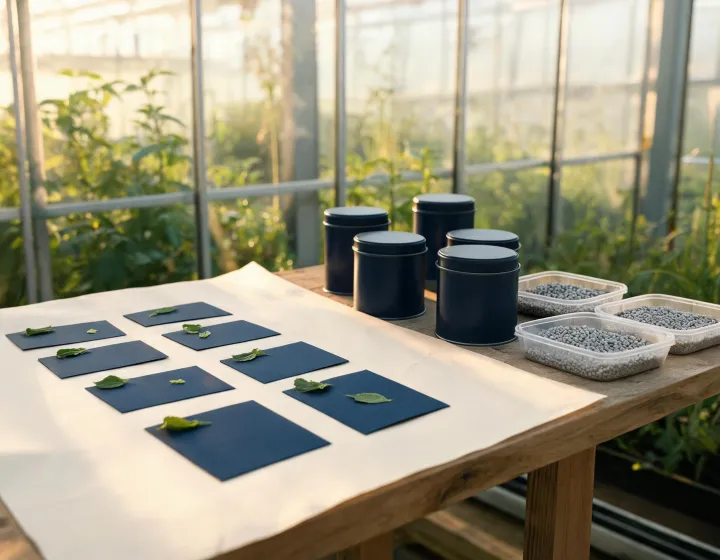
Use the matrix to convert a use story into RFQ fields. Public product-family references only frame questions; they are not a substitute for the quoted lot. Chloride-sensitive horticulture, dry NPK blending, fertigation and industrial KOH use cannot share one generic potassium label without restating assay, particle size and package format.
| Use context | Fields to lock | Open supplier answers | Limitation |
|---|---|---|---|
| Dry blend for row crops | K2O basis, granule size, moisture, bag or bulk | Assay method, anti-caking, CoA columns | A blend recipe is not evidence of market registration |
| Chloride-sensitive horticulture | SOP versus MOP, chloride ceiling, crop or use | Water solubility, insolubles, pack size | Low-chloride claims require the quoted grade |
| Fertigation or soluble feed | Soluble grade, particle profile, liter or kilogram quantity | Trace metals, insolubles, IBC or bag pack | This desk does not give mixing instructions |
| Industrial KOH or process salt | Concentration, flake or liquor, destination site rules | UN number, storage range, SDS revision | Transport class depends on exact concentration |
One view treats “potash” as enough for a first quote. The other view requires K2O basis, moisture and particle size before any plant is contacted. We keep both views visible: a generic name can start the brief, but quotes stay incomparable until the assay basis is written. Buyers who skip assay often discover later that standard MOP and a soluble grade cannot run on the same blender setting.
Some teams accept a product-family SDS to move freight planning. Quality teams wait for a lot CoA that reports K2O, moisture and insolubles. Both documents can be requested. Neither file issued for a related grade proves the quoted material. This site does not hold ISO, TSCA or GMP certificates; those remain supplier evidence to verify against the exact article.
Density, pH and flash point apply mainly to liquid KOH or solutions and should not be copied from a dry MOP SDS. Molecular weight and active content are useful only when the buyer states which salt is intended. Market-registration questions stay with the proposed supplier and the intended US use; this path does not issue crop-protection clearances.
State the crop, blending duty or industrial process. Plants need that context to confirm formulation and pack, not to infer agronomic performance.
Ask whether the proposed product is offered for the intended US use. The answer is a supplier statement to review, not a clearance issued here.
If a KOH liquor is involved, request UN number and class from the exact SDS. Do not reuse values from another concentration or from dry MOP.
Send crop or process, K2O or KOH basis, quantity and destination. We then request factory quotes for bulk potash fertilizer on that written scope.
QUALIFIED BUSINESS BUYERS
Compare factory wholesale quotations on one specification basis.
FREE basic specification and sourcing-requirements review
Eligible first orders may receive a benefit of up to 3%
Eligibility applies to qualified business buyers and is confirmed after we review your product, quantity, destination, and sourcing requirements.